Repetitive production tasks
Feeding, handling, soldering or end-of-line work.
- Systems to consider
- Robotic Production Cells · CAD to Solder
- Prepare for the first discussion
- Part variations, current cycle time, line layout and quality expectations.
Find a starting point for your task, prepare your site information and define what to measure during a pilot.
This guide supports an initial discussion. Platforms, sensors and application scope are determined through technical assessment.
5 application areas shown
Feeding, handling, soldering or end-of-line work.
Tracking controlled tests and measurement data.
Route-based observation and equipment condition records.
Workflows from ordering to preparation and delivery.
Collecting imagery and sensor data before personnel enter.
Review these topics before a discussion. Your checkmarks stay on this page only; they are not saved or submitted.
0 / 6 topics reviewed
Timing and deliverables are agreed following technical assessment and project scoping.
Together, we define the current workflow, target task and baseline measurements.
Where appropriate, layout, workflows and interfaces are assessed through simulation or prototypes.
Test the task under defined conditions and compare results with acceptance criteria.
Pilot results inform the project scope for expansion, operator training, maintenance and support.
Explore field demonstrations, integration projects and product showcases with their source records.
QuadRobotics carried out project management, coordination and systems engineering on behalf of TURAÇ for Drone Kalkanı. The project brought together multiple disciplines within a demanding development schedule.
Explore our role ↗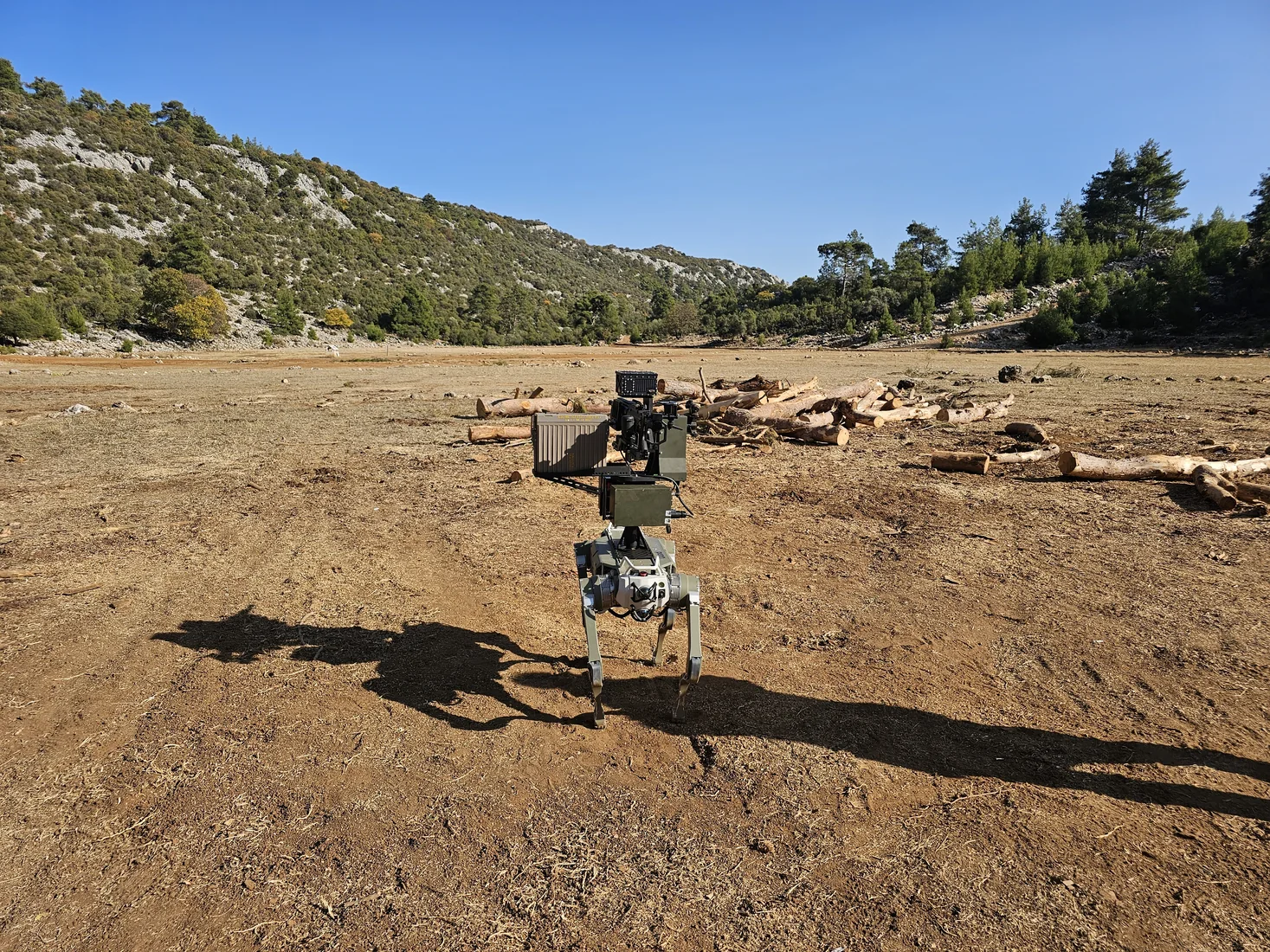 Field demonstration · 2024
A combined quadruped platform and payload application. Anadolu Agency covered the Foça demonstration.
BARS · Foça field record →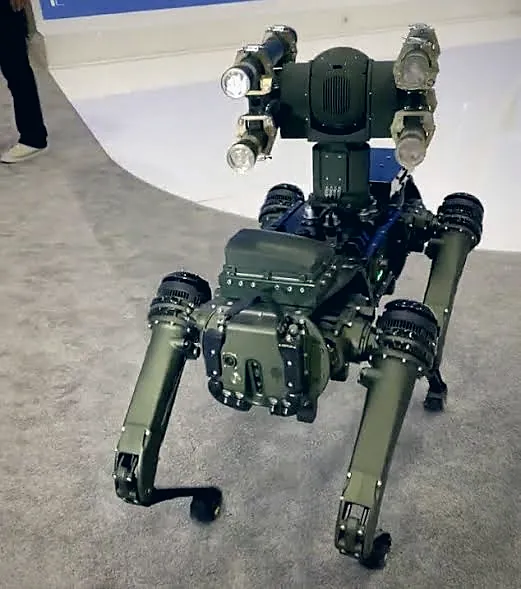 Integration project · 2025
Work combining a robotic carrier and mission payload in one system. Our company announcement describes our integration and coordination role.
KOZ project profile →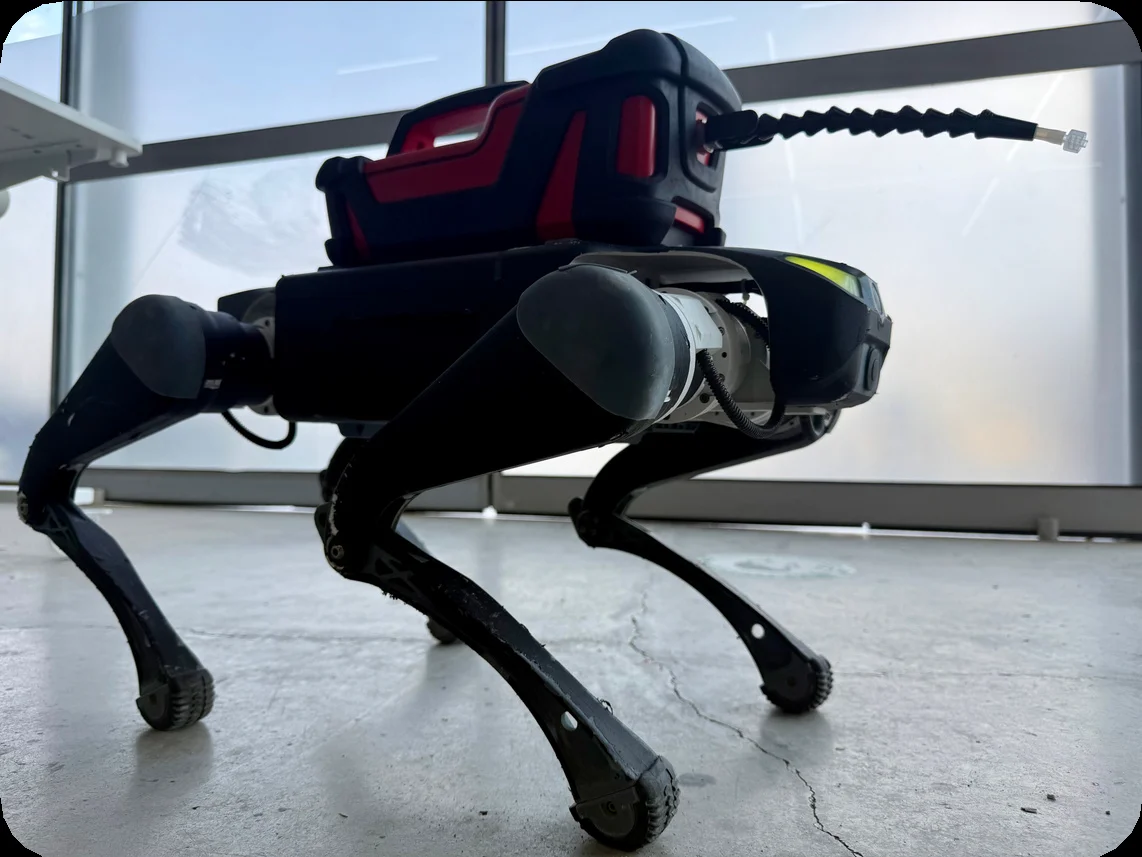 Product showcase · 2025
International presentation of a legged CBRN robot. Sensing scope is assessed against the sensor and validated configuration.
AYBARS-C · Milipol record →Control interfaces, sensors and task requirements are assessed first. This determines compatibility and any adaptation needed.
Share your task and operating environment to request an assessment discussion. Demonstration and pilot options depend on the system’s development stage and project scope.
Timing depends on hardware supply, integration, site readiness and acceptance testing. A project schedule is developed after technical assessment.
Data types, access permissions, network requirements and on-premises or cloud needs are assessed at the start. Connections and interfaces are subject to technical validation.
Operator training, maintenance, software updates and remote support needs are defined with the project and service scope. Support timelines and responsibilities are specified in the agreement.
The portfolio includes project applications, pilot developments and research goals. The stage on each product card is the starting point for an assessment discussion.
Start with the task, operating environment and acceptance criteria.