Hardware and control integration
Bringing robot platforms, task equipment, sensors and software interfaces together through system-level integration of mechanical, electronic and control components.
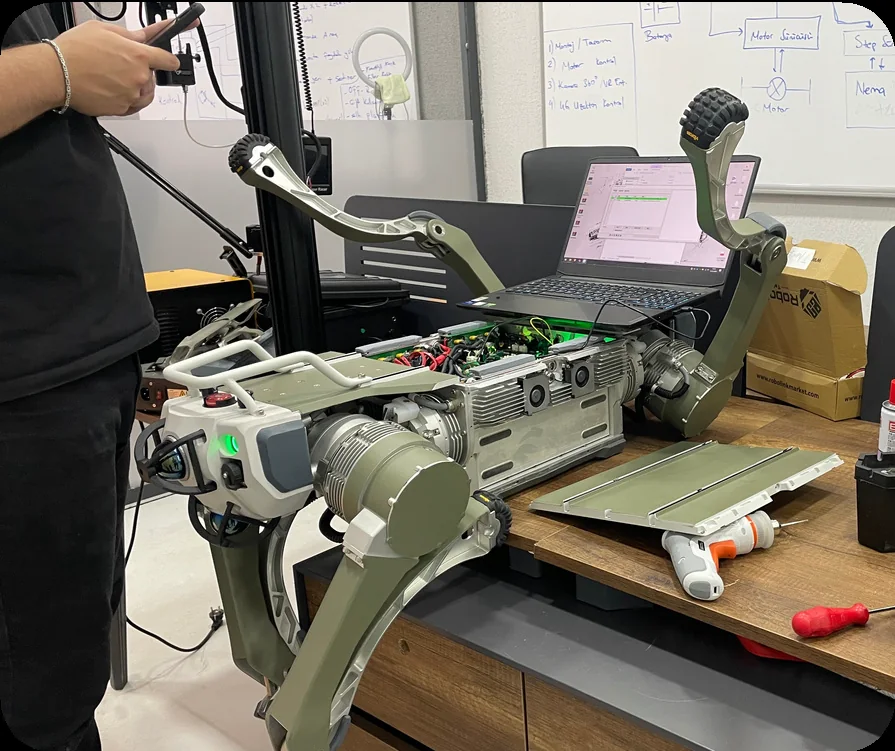
We integrate mechanical, electronic, control and task software components. Project integration experience informs our work on simulation, navigation and reusable robotics software.
Bringing robot platforms, task equipment, sensors and software interfaces together through system-level integration of mechanical, electronic and control components.
A robot arm has been integrated with a mobile platform. Access to task locations, gripper requirements and task software are assessed for each application.
Addressing load, speed, vibration and acoustic measurements within a shared test workflow in bearing test system development, with traceable measurement evaluation.
Development work for DT Savunma.
Project profile →Combining robot motion, peripheral equipment and task sequences within an application workflow. Barista Robot and CAD to Solder illustrate these application areas.
Modelling robots, environments and workflows virtually to assess placement, cycles and task scenarios. Customer project scope is described under Services.
Research and testing of position verification using QR references in GPS-denied environments. Adaptation alongside other sensing and navigation components is assessed for each site.
Integrating imaging and task sensors with robot platforms, and connecting data transfer with task software for inspection and remote observation scenarios.
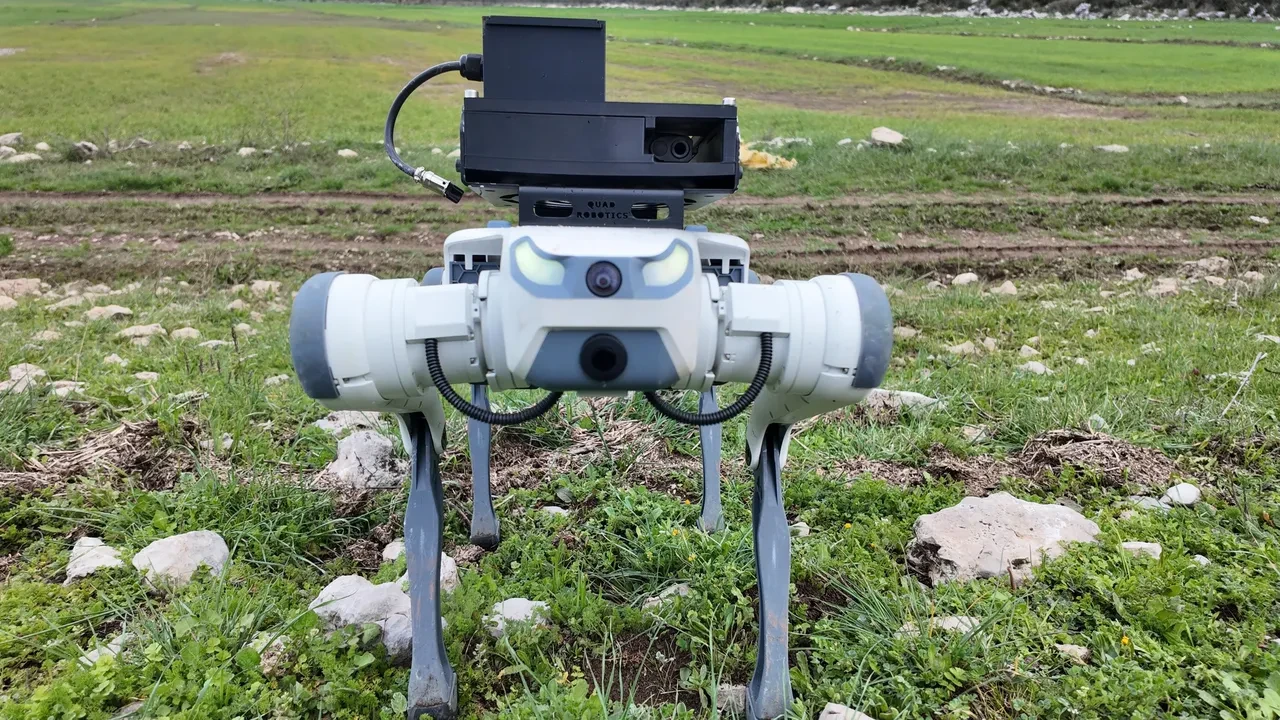
Physical AI addresses how robots perceive their surroundings, evaluate task-related decisions and translate them into physical action.
QuadRobotics starts with its integration and task software experience to develop and validate new capabilities in applications with a defined scope.
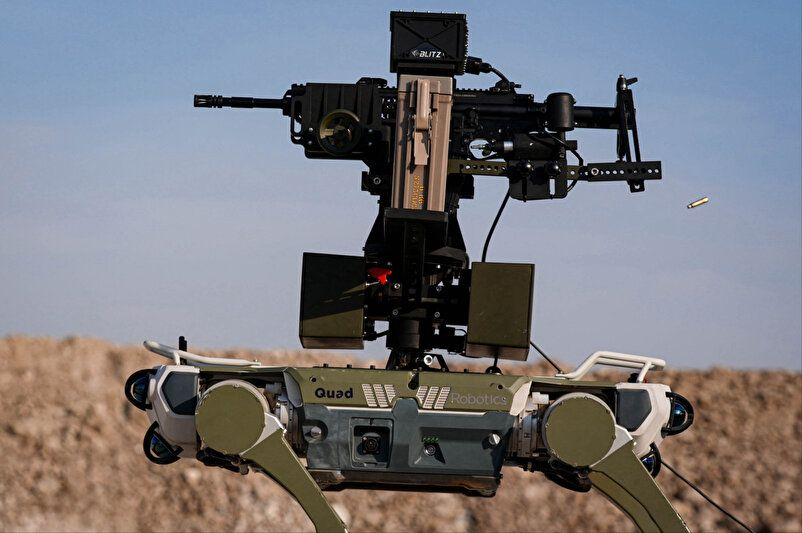
One Brain, Quad Foundation Model and Cloud Robotics are complementary development areas. Their technical maturity, validation steps and application scope are assessed individually.
Learning and decision-making research
Shared task software and skills infrastructure
Mobile robots · Robot arms · Task equipment
The goal is to reuse tasks and skills developed in one project across compatible robots. Separating robot-specific adapters from shared task management aims to reduce the need to develop software from scratch for each application.
Development approach: Start with selected robots and tasks, then expand the scope in stages.
AI research aimed at jointly assessing imagery, sensor data, task instructions and robot state. Target capabilities include observing again when conditions change, updating plans and requesting human assistance when needed.
Research stage: Validate clearly bounded tasks first, then expand applications based on the results.
Work on managing different robots' tasks and computing resources through shared systems. This includes remote operations and distributing work between the robot, facility server and private cloud.
Development goal: Test field conditions including connection loss, reconnection and task records together.
These areas represent development and research work. They are not presented as finished software products validated across all robot platforms.
Research into preparation quality, order scheduling and learning across locations.
Explore the work →Work towards shared task, location, status and event records.
Explore the work →One Brain is a development goal for shared task software and skills infrastructure. Different robots require adaptation and field validation; the scope is assessed by task and platform.
One Brain represents shared task management and software infrastructure; Quad Foundation Model represents learning and decision-making research. The goal is to use validated capabilities together.
We first assess the platform's control interfaces, sensors and task requirements. Compatibility and integration work are determined by that technical assessment.
We aim to evaluate shared software against defined tasks and real operating conditions.
R&D and tests have been carried out on QR code-based indoor navigation. Position verification using reference points in factories and warehouses can support other navigation and sensor systems.
Task completion, adaptation to changing conditions and the need for operator intervention are key assessment criteria. Simulation and comparative testing are planned to support field validation.
Cloud Robotics work will test how tasks are distributed between robots, facility servers and private cloud systems, behaviour during disconnection and synchronisation of task records after reconnection.
Robot adapters, task and skill libraries, test tools and datasets with appropriate usage rights form the basis of shared technical expertise. Adaptation and validation requirements are assessed separately for each platform.
These areas are at the research and project preparation stage; they are not presented as finished products or approved funding programmes.
Project preparation for rapid mapping and three-dimensional digital models of environments, for applications such as incident scene investigation.
Aiming to develop foundation model research and international research partnerships to adapt perception, task planning and autonomous decision-making to space missions.
Adapting task software and learning models to robots from different manufacturers. The aim is to validate task performance against sensors, movement characteristics and operating conditions.
Applications to national R&D support schemes and international research programmes such as EIC Pathfinder are being considered. An application plan does not imply funding approval.
Our planned foundation model for the KARAHAN family reflects a long-term R&D direction towards vehicles that evolve through software. Explore the vision alongside the vehicle family’s field experience.
Explore KARAHAN →Start with your needs. Define the right system together.